“forest coffee” search results (6700)

Speed up the development of ecological agriculture
The development of ecological agriculture is an important embodiment of the strategic plan of the 18th CPC National Congress to put the construction of ecological civilization in a prominent position and strive to build a beautiful China. it is also an important measure to implement the forest Yunnan construction of the provincial party committee and provincial government and the construction of Lincang and beautiful Lincang forests of the municipal party committee and municipal government, to enhance the brand of green, ecological and safe agricultural products in Lincang, and to speed up the development of rural economy.
2014-08-12 Speed up ecology agricultural development ecological agriculture implementation the Party's
Description of Coffee Flavor at Esmeralda Manor in Panama; introduction to the taste of varieties in producing areas
Panama is rich in forest resources and has many tree species, including valuable wood such as mahogany, cedar, teak, mahogany, and cedar. The forest area of eastern Dalian Province is the most widely distributed, but it has not been fully developed due to lack of market and for reasons such as national defense and protection of the natural ecological environment. [5] according to FAO estimates in 2010, the forest area of Panama is 4.29 million hectares, accounting for the land area.
2016-10-10 Panama Ace Mela Manor Coffee Flavor description Grinding characteristics varieties
Introduction to the flavor and taste characteristics of Ethiopian coffee manor with fragrant and mellow smell
Ethiopian coffee beans grow in close to the natural environment. After years of planting under the same growth conditions, Ethiopian coffee beans have gradually adapted to the environment here. More than 60% of coffee beans are grown in forests or semi-forests. Large-scale coffee-growing villages account for about 35% of the country's total coffee production.
2016-09-13 Smell mellow thick Ethiopia coffee manor producing area flavor taste
Ethiopian coffee producing area
At 1400 to 1800 meters above sea level, Lim continued to the south to reach the Gemma producing area. This area is the main body of Kafa forest, specializing in commercial beans, the annual export volume of more than 60, 000-80, 000 tons, accounting for 1/3 of Egypt's output, is the largest producing area. Gemma is sun-dried beans, which is very common in our market, also known as Ethiopian mocha, but its price is much lower than that of Harald mocha. Jima production
2015-04-01 Ethiopia coffee producing area altitude 400800 meters Lim continue
Ethiopia Sidamoth Estate Coffee Flavor Description Grind Treatment Taste Region Introduction
From a historical point of view, coffee has a great relationship with the history and religious culture of Ethiopia. In ancient times, Ethiopia was called Abyssinia, which was the country of Axum and belonged to the Solomon Dynasty. According to literature records, Hamitic people migrated from Asia Minor to present-day Ethiopia. Semitic merchants from about 7 BC
2016-10-06 Ethiopia Dharma Ted Manor Coffee Flavor Description Grinding Processing
Panamanian Cupid Coffee Flavor and taste introduction to boutique coffee beans in the manor area
Panama is rich in forest resources and has many tree species, including valuable wood such as mahogany, cedar, teak, mahogany, and cedar. The forest area of eastern Dalian Province is the most widely distributed, but it has not been fully developed due to lack of market and for reasons such as national defense and protection of the natural ecological environment. [5] according to FAO estimates in 2010, the forest area of Panama is 4.29 million hectares, accounting for the land area.
2016-09-02 Panama Cupid coffee flavor taste manor producing area characteristics boutique
Introduction to the flavor and taste of high-quality coffee beans in Panama Cupid coffee producing area
Panamanian land use: arable land accounts for 8.9%, permanent pastures account for 20.0%, forests and woodland account for 43.0%, others account for 28.1%; per capita arable land accounts for 0.6 acres. [2] Mineral resources Panama is rich in mineral resources, but it is not exploited much, and the scale of the mine is relatively large.
2016-09-24 Panama Cupid coffee variety producing area boutique coffee beans flavor taste
Good average quality; aromatic and full-bodied Ethiopian coffee plantation taste characteristics
Ethiopian coffee beans grow in a near-natural environment. After years of cultivation under the same growing conditions, Ethiopian coffee beans have gradually adapted to the environment here. More than 60% of coffee beans are forest or semi-forest grown coffee. Coffee farming villages produce about 35 percent of the country's coffee.
2016-09-13 average good quality smell mellow thick ethiopian coffee estate producing area
Introduction of Coffee Bean growing Environment in Ethiopia
Ethiopian coffee beans grow in close to the natural environment, after years of planting under the same growth conditions, Ethiopian coffee beans have gradually adapted to the environment here. More than 60% of coffee beans are grown in forests or semi-forests. Large-scale coffee-growing villages account for about 35% of the country's total coffee production. Many of these are used.
2016-07-05 Ethiopia coffee beans growth environment introduction coffee manor producing area
Ethiopia Coffee Gemma Production Area
At an altitude of 1,400 to 1,800 meters, Lim continues south to reach the Gemma region. This area is the main body of Kafa Forest, specializing in bulk commercial beans, with an annual export volume of more than 60,000 to 80,000 tons, accounting for one third of Egypt's output, and is the largest production area. Gemma is a sun-baked bean, which is very common in our market. It is also called Ethiopian mocha, but its price is much lower than Harald mocha. Jimachan
2015-02-12 Coffee beans region presentation Ethiopia coffee altitude 400 800 m
Introduction to the Fine Coffee Flavor Manor of Ethiopia
Ethiopian coffee beans grow in close to the natural environment, after years of planting under the same growth conditions, Ethiopian coffee beans have gradually adapted to the environment here. More than 60% of coffee beans are grown in forests or semi-forests. Large-scale coffee-growing villages account for about 35% of the country's total coffee production. Many of these are used.
2016-07-15 Ethiopia boutique coffee flavor taste manor producing area introduction
The "living fossil" of Chinese coffee
In early May, the reporter accompanied more than 60 domestic and foreign experts and scholars to Zhukula Village, Pingchuan Town, Binchuan County, to investigate one of the birthplaces of Chinese coffee and the only model of Zhukula Coffee Forest that has been inherited for more than a hundred years. There are the purest and most primitive coffee beans in the world, which have high historical and scientific research value, and can be called the living fossils of Chinese coffee. As soon as I entered the village, I faced
2014-05-13 Coffee news coffee machine coffee beans
Papua New Guinea Bird of Paradise Manor Coffee Flavor Features
Papua New Guinea is the second largest country in the South Pacific after Australia in terms of population and area. It consists of New Guinea in the north and Papua in the south. It borders Irian Jaya province in Indonesia to the west and Australia across the Torres Strait to the south. The Melanesian Islands are rich in forest resources, covering an area of 36 million hectares of tropical virgin forest, about 30 million hectares.
2016-08-23 Taste Variety Papua New Guinea Bird of Paradise Manor Coffee Flavor Special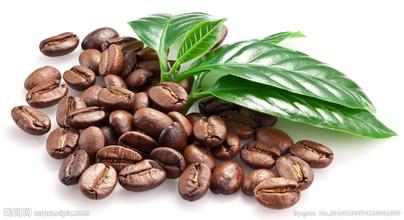
Guatemala Antigua Coffee with good Taste Flavor description Grinding characteristic Price Variety producing area
Guatemala covers an area of about 108899 square kilometers. The land features can be divided into plateau volcanoes, lowland tropical forests, volcanic sandy shore plains along the Pacific coast, and virgin lands along the Caribbean Sea. The SierraMadre Mountains of Central America, which straddles Guatemala from east to west, covers an area of about 2GP3 and has 34 volcanoes. In this country, rivers and lakes dot the landscape
2016-10-15 Taste Guatemala Antioch Coffee Flavor description Grinding characteristics Price Product
Introduction to the planting environment of Rwanda boutique coffee bean flavor manor with excellent evenness
Rwanda has tin, tungsten, niobium, tantalum, Beryl, gold and so on. The storage of tin is about 100000 tons. Peat reserves are estimated at 30 million tons. Lake Kivu has natural gas reserves of about 60 billion cubic meters. The Niagabango tungsten deposit is the largest tungsten mine in Africa. The forest covers an area of about 620000 hectares, accounting for 29 per cent of the national area, and is one of the important natural resources of Rwanda. [3] Plant Luwang
2016-08-17 Uniform excellent Rwanda boutique coffee beans flavor taste manor planting ring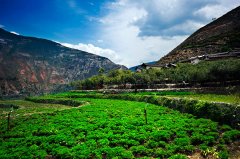
Yunnan Coffee A hundred-year Coffee Legend in Zhukula Village, Dali, Yunnan
Zhu Kula, located in the depths of the mountains in the northeast of Pingchuan Town, Binchuan County, Yunnan Province, is the junction of Chuxiong, Dali and Lijiang, surrounded by the Yupao River, a tributary of the Jinsha River. Due to inconvenient transportation, Zhu Kula is almost isolated from the rest of the world, so it is a little-known Yi shanzhai. When it comes to the history of Chinese coffee, we have to mention Zhukula Coffee in Dali, Yunnan.
2016-06-14 Yunnan Coffee Dali Zhu Kula hundred years Legend located in Yunnan Province
Intense and inviting Guatemala coffee estate region Flavor Taste Characteristics Fine coffee beans Introduction
Guatemala is located in the tropics. The northern and eastern coastal plain areas belong to tropical rain forest climate, and the southern mountainous areas belong to subtropical climate. There are two dry and wet seasons in a year. The wet season is from May to October, and the dry season is from November to April of the following year. Guatemala has a tropical climate on the narrow, fertile plains of the Pacific Ocean. The central plateau is also the cultural center of Guatemala, where year-round temperatures range from 1300 to 1800 meters
2016-08-10 rich human Guatemala coffee manor appellation flavor taste characteristics fine
Introduction to the characteristics and Flavor of Ethiopian Coffee Manor with Mocha refreshing Flavor
Ethiopian coffee beans grow in close to the natural environment, after years of planting under the same growth conditions, Ethiopian coffee beans have gradually adapted to the environment here. More than 60% of coffee beans are grown in forests or semi-forests. Large-scale coffee-growing villages account for about 35% of the country's total coffee production. Many of these are used.
2016-09-18 Mocha refreshing flavor Ethiopia coffee manor producing area variety characteristics
Introduction to the characteristics of High-quality Coffee beans in the producing area of Jamaican Blue Mountain Coffee
Lanshan County, with an average annual precipitation of 1660 mm, spans the birthplace of the Yangtze River and Pearl River basins, with well-developed water systems. There are 69 rivers with a rain collection area of more than 10 square kilometers or more than 5 kilometers. The theoretical reserve of water energy is 212000 kilowatts, the average annual flow of surface water is 1.8568 billion cubic meters, and the average annual amount of groundwater is 337.7 million cubic meters. The annual average amount of water resources is 2.3592 billion cubic meters.
2016-09-23 Jamaica Blue Mountain coffee variety producing area flavor taste boutique coffee beans special
Djimmah producing area Ethiopian boutique coffee beans African flavor coffee
Yega Chefe and Sidamo, which are famous for their bright sour taste, are famous for their charming and mixed fragrance, while the western half of the forest is covered with a large area of primeval forest, mostly in the process of complete natural evolution, creating a more complex variety of coffee. The coffee varieties in the Kafa forest in the southwest are extremely resistant to disease. Due to natural evolution and less manual screening, its overall flavor is slightly lower than that of the eastern half of the wall. The coffee producing areas of Ethiopia are
2016-07-15 Gemma Djimmah producing area Ethel Searle Biya boutique coffee beans